
Citizen engagement works best when residents can shape public decisions, not simply react to them. To understand how to improve citizen engagement, start by defining its purpose: create meaningful ways for people to share their experience, influence decisions, and help address community issues.
Citizen engagement can strengthen trust and make public decisions more responsive, but it takes staff time, planning, and sustained attention. Without a clear purpose, it can feel like another process for residents and agencies to manage. With one, every conversation can connect to a real decision or community need.
This article explains what citizen engagement means, how it differs from participation, and why purpose should guide its design. It also weighs immediate benefits, such as clearer communication and shared understanding, against the longer-term investment needed to keep engagement accessible and useful.
Key Takeaways
- Define the community issue and the decision residents can influence before choosing how to involve them.
- Make participation accessible, with clear ways for residents to contribute and understand how their input will be used.
- Use civic education resources, such as short videos or brochures, to help residents understand public policy issues.
- Weigh the immediate value of better communication against the ongoing time and planning needed to sustain participation.
Immediate benefits and long-term costs of participation
Participation gives officials insight into residents’ needs and helps governments shape more responsive public services. Its value depends on accessible opportunities for dialogue and meaningful follow-through.
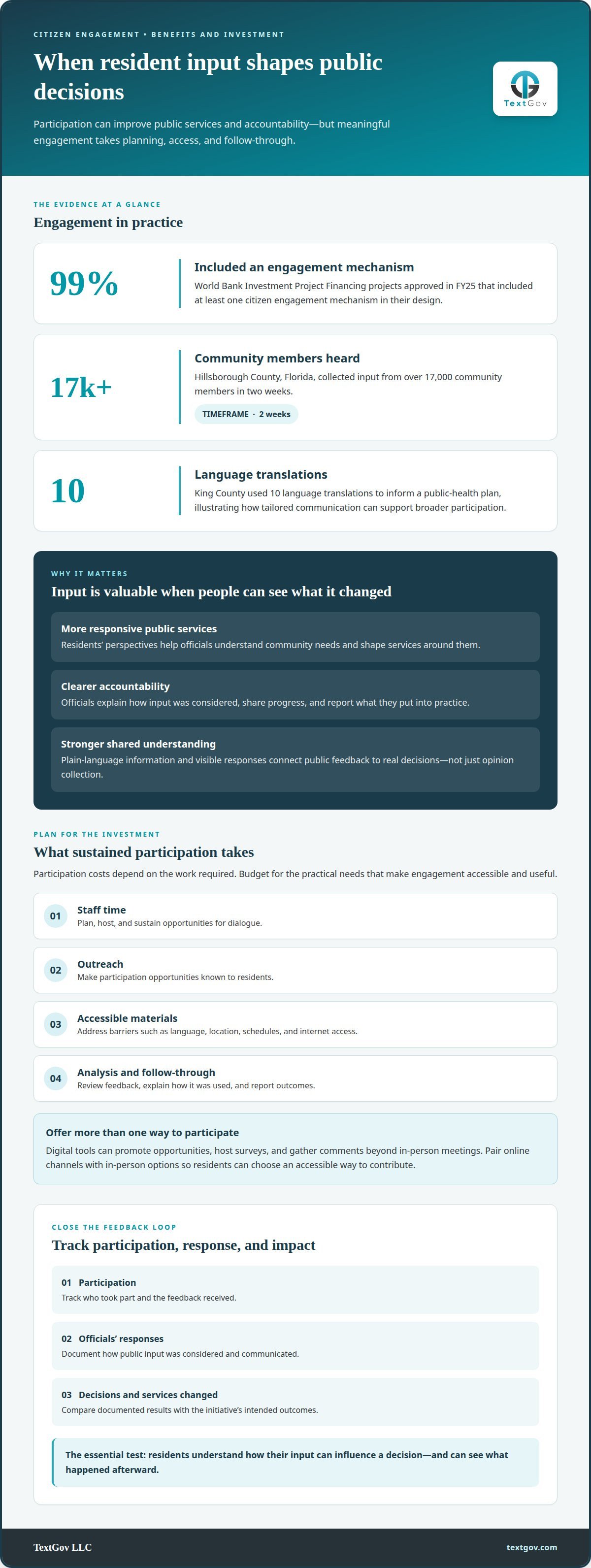
Of World Bank Investment Project Financing projects approved in FY25, 99 percent included at least one citizen engagement mechanism in their design. Hillsborough County, Florida, collected input from over 17k community members in two weeks.
Decision-Making and Public Accountability
Participatory decision-making brings residents’ perspectives into public choices, while accountability requires officials to explain how they use that input. Together, they help communities see whether feedback influenced a decision or service. Governments can explain priorities, share progress, and report what they put into practice. This visible connection makes dialogue more meaningful than collecting opinions without follow-through.
Resident and Electoral Participation
Resident and electoral participation includes contributing to public decisions, registering to vote, and taking part in campaigns. Each offers a way to influence public priorities, although electoral activity differs from consultation on a specific policy. Governments can share opportunities through clear notices, surveys, public meetings, and community partnerships. Accessible information helps residents understand how to participate and what their contribution can influence.
Participation costs depend on staff time, outreach, accessible materials, analysis, and follow-through. Governments can budget for these needs and share capacity through partnerships.
Digital tools and social media can promote opportunities, host surveys, and gather comments beyond in-person meetings. Pair online channels with other ways to participate so people can choose an accessible option.
Track participation, feedback received, and officials’ responses to measure engagement. To evaluate its impact, document which decisions or services changed and compare the results with the initiative’s intended outcomes.
What Is Citizen Engagement and Participation?
Citizen engagement gives residents ways to understand public decisions, share feedback, and contribute to initiatives. Its value depends on clear information, accessible opportunities, and visible responses.
Engagement, Public Trust, and Civic Education
Engagement connects public input with decisions, while civic education helps residents understand policies and how to participate. Infographics, short videos, and brochures can explain a proposal before officials request feedback. Plain-language explanations can address misinformation, and publishing how input informed a decision can strengthen trust. For effective consultations, ask focused survey questions and explain how responses will be used.
Meeting Formats and Engagement Timing
Town halls and public forums let residents raise concerns, ask questions, and hear directly from officials. Public comments and speaker opportunities give people a defined way to contribute during meetings. Request feedback while a decision can still be shaped, and state the response deadline clearly. Agencies should invite participation at a point when input can make a difference. Austin’s hyperlocal engagement approach received an American Planning Association Excellence award.
Accessible and Inclusive Participation
Inclusive engagement reduces barriers tied to location, schedules, language, and internet access. Offer in-person and virtual forums, accessible materials, and several ways to submit feedback. The National Civic League says engagement by racial and ethnic minorities and others traditionally excluded from decisions must be a baseline expectation. King County used 10 language translations to inform a public-health plan, illustrating how tailored communication can support broader participation.
Legal Requirements for Public Participation
In the United States, public participation and open-meeting requirements depend on applicable state and local rules, the public body, and the meeting. Governments should align notices, public comments, and meeting procedures with those requirements. To support access and inclusion, explain participation options in advance and make meeting materials easy to find. Harris County’s Flood Control District used virtual engagement tactics to expand access and participation.
Definition and purpose of citizen engagement
Citizen engagement is a two-way process in which residents help shape public decisions and community efforts. It goes beyond announcing a policy: local government listens, explains choices, and shows how public input informs action. Residents can also work with local groups, associations, and institutions on challenges governments cannot solve alone. The goal is meaningful involvement, not participation for its own sake.
Purpose sets the direction. Before launching an initiative, define the issue, the people affected, and the decision they can influence. Then assess organizational capacity, community context, and potential partners. For example, a neighborhood planning effort should clarify whether residents are identifying priorities, weighing options, or reviewing a proposed plan. This sets realistic expectations and prevents participation from being mistaken for shared decision-making.
Good engagement also makes the process visible. The phrase “civic infrastructure” was coined by the National Civic League in the 1980s to describe the relationships and structures that support civic life. In practice, transparency means explaining who decides, what constraints apply, and how feedback will be considered. Those details help community members judge whether their time and interest can contribute to a meaningful outcome.
Evaluate engagement against its original purpose. Community-driven research can combine interviews and focus groups with surveys and statistical analysis, giving officials both personal accounts and broader patterns. A local government might use the findings to identify a service gap, revise a program, and report back on the change. Start by defining the public decision, then choose participation methods that give residents a genuine opportunity to inform it.
TextGov
TextGov helps courts and government agencies strengthen public communication with digital tools designed to improve customer service, increase efficiency, and reduce call volumes. Its Court Chatbot and Government Chatbot support public-sector communication, while Jury Texting and pre-trial texting help agencies communicate with jurors. These tools can complement a broader engagement strategy by making public information easier to access and routine communication more efficient.
Consider these tools when your agency is planning how to support resident communication alongside meetings, consultations, and other participation opportunities. Start with a clear purpose: identify the communication challenge and how it connects to residents’ needs.
Make the Next Engagement More Purposeful
Lasting progress starts with a clear decision residents can influence and a thoughtful plan for acting on their input. As you consider how to improve citizen engagement, focus on practical next steps: make public information easier to access, clarify how people can participate, and explain what happens after feedback arrives. Consistent, useful communication can turn a single consultation into an ongoing relationship with the community.
TextGov’s Court Chatbot, Government Chatbot, and Jury Texting support communication for courts and government agencies. These tools can complement in-person and digital participation by helping agencies share information and communicate with the public.
Start with a purpose residents can understand, then build each engagement effort around it. Meaningful participation grows through clear, deliberate action.
Frequently Asked Questions
Why is Community Engagement Important?
Community engagement helps local leaders understand how public decisions affect daily routines, not just agency operations. Residents can point out practical concerns that formal records may miss, such as confusing service instructions or a difficult route to a public facility. Their input can also connect neighbors and community groups, helping officials recognize shared needs and coordinate responses more effectively.
How Can Local Governments Promote Civic Engagement?
Local governments can make participation easier by publishing a clear, recurring schedule of upcoming decisions and opportunities. Each notice should identify the issue, explain what residents can contribute, and say how to participate. Afterward, share a concise update describing the decision and how public input was considered. This follow-through helps residents understand the purpose of future opportunities.
What are the most effective strategies to improve citizen engagement?
Effective strategies to improve citizen engagement connect each request for input to a specific decision and clear follow-up. For example, a planning team could ask residents to compare options before selecting a preferred design, then report which considerations shaped the outcome. Keep questions focused, offer multiple ways to respond, and use feedback to improve the next engagement effort.
What are successful examples of citizen engagement programs in U.S. cities?
Hillsborough County, Florida, collected input from over 17k community members in two weeks. Austin’s hyperlocal engagement approach received an American Planning Association Excellence award, and King County used 10 language translations to inform a public-health plan.