
In 2026, the leading cause of custodial arrests in some states isn’t criminal intent, but rather a simple missed court date that costs taxpayers millions in avoidable incarceration expenses. You’ve likely felt the frustration of a trial schedule collapsing because of high failure-to-appear rates or watched your staff spend hours answering the same routine “do I need to show up” phone calls. It’s clear that relying on mail-only notifications is a strategy from a different era that no longer meets the needs of a mobile-first society. Implementing a sophisticated juror text reminder system is the most effective way to bridge the gap between administrative efficiency and civic engagement.
Discover how automated juror text reminders can revolutionize your court’s operations, highlighting proven results like the 96% juror appearance rates seen in counties that have already embraced this digital shift. We’ll examine the practical steps to modernize your notification strategy, reduce administrative workloads, and protect juror privacy under new 2026 regulations. By the end of this guide, you’ll understand how to position your court as a pioneer in judicial excellence while ensuring your trial calendars remain full and functional.
Key Takeaways
- Transition from antiquated mail-only notifications to a mobile-first communication strategy that aligns with modern constituent behaviors and expectations.
- Discover how a cloud-based juror text reminder system utilizes automated workflows to synchronize with your existing database and trigger real-time status updates.
- Evaluate the significant ROI achieved through enhanced compliance benchmarks and a substantial decrease in manual staff inquiries and routine phone calls.
- Master the implementation process by auditing CMS compatibility and establishing high-level encryption protocols for sensitive juror information.
- Explore how customizable Jury Texting schedules can elevate the public’s perception of the court system as a proactive, technologically sophisticated institution.
The Crisis of Non-Compliance: Why Traditional Juror Notifications are Failing
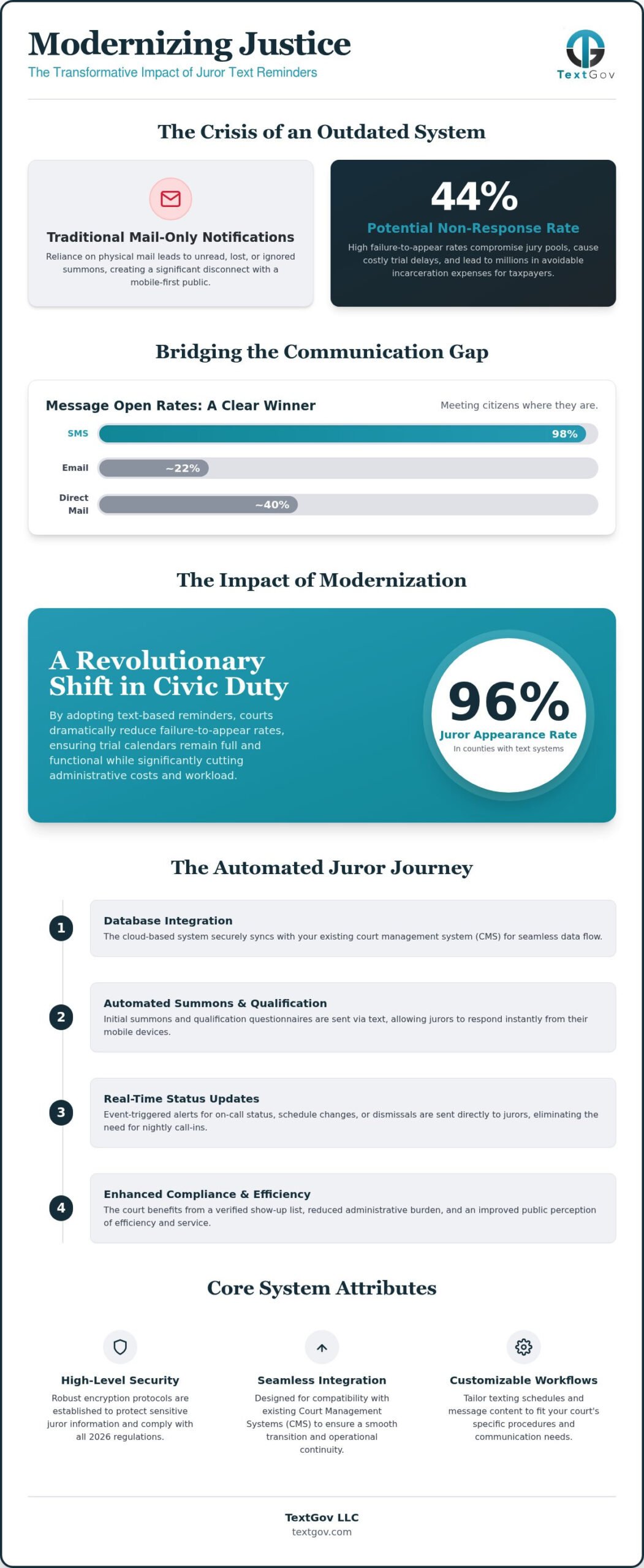
The modern judicial system faces a silent operational crisis. While mandatory jury service remains a cornerstone of the American legal framework, the methods used to summon citizens are increasingly obsolete. Traditional mail-only notifications often go unread or lost, leading to staggering non-response rates that threaten the diversity and integrity of the jury pool. In 2024, various court systems reported significant non-response rates, with some areas seeing non-response rates climbing as high as 44% in specific demographics. This disconnect isn’t just an administrative annoyance; it’s a systemic failure that compromises the right to a fair and timely trial.
The Economic Impact of Trial Delays
When jurors fail to appear, the entire judicial engine grinds to a halt. Adjourned trials force judges, attorneys, and court staff to reschedule proceedings, creating a backlog that takes months to resolve. The financial consequences are immense. Jurisdictions nationwide have reported that missed court appearances lead to millions of dollars in arrest expenses and substantial jail holding costs. Beyond these macro figures, there is a granular administrative toll. We define the “cost-per-juror” administrative overhead in 2026 as the cumulative expense of printing, postage—which can be automated through Postal Methods—and the manual labor required for staff to manage nightly call-in lines and follow-up outreach for non-compliant citizens.
Shifting Citizen Expectations for Government Communication
Today’s population is mobile-first and expects government interactions to mirror the efficiency of the private sector, where organizations utilize sophisticated outreach tools from providers like Calls-Are-Us to maintain high engagement levels. Relying on physical mail or requiring citizens to call a recording every night creates unnecessary friction. SMS communication offers a transformative solution, boasting a 98% open rate that far exceeds email or traditional post. Implementing a modern juror text reminder system allows courts to meet citizens where they are. A robust juror text reminder system serves as the critical link between the court’s needs and the citizen’s daily habits. This proactive approach reduces the likelihood of unintentional non-compliance, as research indicates many failures to appear stem from simple confusion or forgetfulness rather than defiance. Courts seeking to understand the full scope of this challenge can explore proven strategies to reduce failure to appear rates that address both the logistical and behavioral factors driving non-compliance. By modernizing these touchpoints, courts can improve public perception and ensure that the administrative burden of manual call-in lines becomes a relic of the past.
Mechanics of a Modern Juror Text Reminder System
The architecture of a modern juror text reminder system represents a significant leap forward in judicial administration. Unlike manual outreach, this cloud-based SaaS platform is designed to integrate directly with existing court databases, allowing for event-triggered SMS alerts that respond to real-time changes in trial schedules. This technology transforms the courthouse into a proactive communicator, ensuring that every citizen receives the right information at the exact moment they need it. By architecting a bridge between case management systems and mobile devices, courts can automate the entire lifecycle of a juror’s service with precision and ease.
Automated Summons and Qualification Workflows
The journey begins with the initial summons. By embedding mobile links within a text, courts can streamline the qualification questionnaire process, allowing jurors to complete required forms on their own devices. This automation captures data instantly and generates immediate confirmation receipts, which helps administrators build a verified show-up list well before the trial date. Digital alerts can also be synchronized with existing juror dashboards, providing a unified resource for all service-related information. This high-level performance ensures that the administrative workload is reduced while the accuracy of the juror pool is maximized.
Real-Time Status and Dismissal Notifications
The most impactful shift occurs in how courts manage daily schedules. Proactive alerts replace the archaic requirement for citizens to call a recorded line every evening. On-Call Status Notifications eliminate the need for nightly phone check-ins by delivering real-time trial updates directly to a juror’s mobile device. This level of responsiveness has already been validated by the federal courts’ use of technology, which has proven that digital tools dramatically enhance the overall experience for participants.
Beyond simple reminders, 24/7 messaging platforms can handle routine inquiries without requiring staff intervention. This capability is essential for reducing courthouse congestion and improving juror satisfaction. There is a profound psychological benefit to receiving an immediate dismissal text; it signals that the court respects the juror’s time and professional commitments. Organizations seeking to modernize their constituent engagement can implement these high-performance Jury Texting solutions to redefine the standards of public service and operational efficiency.
Quantifying the ROI: Efficiency Gains and Compliance Benchmarks
Measuring the success of a digital transformation requires looking beyond simple implementation to the concrete data that defines operational excellence. A modern juror text reminder system is not just a convenience; it’s a high-performance engine for judicial reliability. In jurisdictions like Gwinnett County, Georgia, the impact is undeniable, with 96% of jurors who opted in for text reminders appearing for their scheduled duty. This isn’t an isolated success. A 2025 study in Santa Clara County, California, found that text message reminders reduced bench warrants for failure to appear by approximately 20%, while an opt-out system in Colorado led to a 30% reduction in missed court dates. These benchmarks prove that consistent, automated touchpoints are the most effective way to secure a stable and diverse juror pool. Agencies looking to build on these results with a comprehensive framework can benefit from reviewing strategies specifically designed to reduce failure to appear rates across both juror and defendant populations.
Reducing Administrative Call Volumes
The burden of routine communication often overwhelms court personnel, pulling them away from high-value judicial tasks. By deploying 24/7 messaging capabilities, agencies can deflect a significant portion of inbound inquiries through automated FAQs. Instead of answering repetitive questions about parking, dress codes, or “do I need to show up,” staff can focus on complex case management. This shift optimizes municipal agency efficiency by ensuring that the Clerk of Court’s office operates as a center for specialized legal administration rather than a simple information desk. The result is a more energized workforce and a streamlined workflow that handles thousands of interactions without human intervention. Courts looking to extend this automation even further can explore how court chatbot software can provide 24/7 multilingual support for routine inquiries beyond what SMS alone can accomplish. For agencies seeking a comprehensive approach to eliminating repetitive staff inquiries, a dedicated government chatbot for FAQ management can automate responses to common questions about office hours, parking, and payment deadlines around the clock.
Beyond compliance, automated messaging optimizes the physical environment of the courthouse. By coordinating scheduled arrivals and providing real-time updates, administrators can manage foot traffic more effectively, which directly enhances courthouse security. The system also simplifies the deferral and excuse process, improving “Qualified Juror” yields. When citizens can easily navigate these administrative hurdles via SMS, they’re more likely to engage with the process rather than ignore the summons entirely. This proactive engagement turns a potentially frustrating experience into a model of public sector efficiency.
Long-term Gains in Judicial Efficiency
The true value of a juror text reminder system lies in its ability to create a predictable environment for trial scheduling. When judges and attorneys have confidence in the juror pool’s appearance rate, they can maintain tighter timelines and avoid the cascading delays caused by no-shows. This reliability reduces the volume of “Order to Show Cause” hearings, which are both time-consuming and costly for the court. Ultimately, this modern approach elevates the juror experience, transforming a mandatory obligation into a streamlined, professional interaction that encourages future civic participation and strengthens the integrity of the justice system.
Implementation Best Practices: Security, Compliance, and Integration
Success in digital transformation isn’t just about the software; it’s about the strategic execution of its deployment. Establishing a robust digital infrastructure begins with a comprehensive audit of your current Case Management System (CMS) to ensure full compatibility. This initial phase identifies how a juror text reminder system will pull real-time data, ensuring that every automated alert reflects the current state of the trial calendar. Once compatibility is confirmed, the focus shifts to establishing secure, encrypted communication channels. With new privacy mandates like Louisiana’s Act 284 taking effect on August 1, 2026, protecting personal information from public disclosure has moved from a best practice to a legal necessity.
Effective implementation also requires configuring custom messaging scripts that precisely mirror your local court rules. These scripts ensure that the tone and instructions provided to citizens are both authoritative and helpful. Training your staff on the centralized dashboard is equally critical. This allows for manual overrides and broadcast alerts during emergencies, ensuring that the court maintains control over its communications at all times. Finally, a successful rollout depends on a clear opt-in campaign. By utilizing summons postcards and court websites to promote the service, you can drive high adoption rates from day one.
Ensuring Court Messaging Compliance
Government agencies must adhere to strict national standards for data privacy and encryption to maintain public trust. A professional juror text reminder system maintains a comprehensive audit trail for all sent and received communications, providing a verifiable record of outreach efforts. This is particularly important for addressing 10DLC (10-Digit Long Code) registration requirements. These regulations ensure that your messages are recognized as legitimate government communications, preventing them from being flagged as spam by mobile carriers and ensuring maximum deliverability.
Seamless CMS and API Integration
The technical backbone of any messaging solution is a bi-directional data flow between the text system and court records. This integration reduces manual data entry errors through automated synchronization, ensuring that when a juror’s status changes in the CMS, a notification is triggered instantly. Implementation fees are a one-time investment for long-term technical support. This strategic partnership allows your court to focus on its judicial mission while the technology handles the complexities of constituent engagement. To begin your journey toward a more efficient courthouse, explore the specialized Jury Texting solutions available for modern agencies.
Elevating Public Service with TextGov’s Jury Texting Solutions
Modernizing judicial interactions requires more than just a new tool; it demands a visionary approach to how courts engage with the public. TextGov LLC provides this essential transformation through a high-performance juror text reminder system that prioritizes both administrative utility and constituent convenience. By moving away from static, one-way notifications, our platform creates a dynamic communication loop that respects a juror’s time while ensuring the court’s operational needs are met. This sophisticated engagement model is designed to elevate the standard of public service, positioning your agency as a leader in the digital-first era. We believe that every interaction between a citizen and the court is an opportunity to strengthen public trust and demonstrate institutional competence.
Our platform offers customizable messaging schedules that are meticulously tailored to the specific rules and requirements of your local jurisdiction. Whether you need to send urgent trial cancellations or routine qualification links, the system handles these tasks with absolute precision. This 24/7 government messaging platform ensures that citizens feel informed and supported throughout their service, reducing the friction that often leads to non-compliance. By leveraging these advanced digital tools, courts can finally close the gap between outdated bureaucratic processes and the modern expectations of a mobile-first workforce. The ability to reach a juror instantly on their mobile device is the most effective way to ensure that trial calendars remain stable and diverse. For courts seeking to complement SMS outreach with always-on conversational automation, pairing this approach with court chatbot software creates a comprehensive digital communication strategy that addresses constituent needs at every touchpoint.
A Strategic Partnership for GovTech Modernization
TextGov LLC operates as a strategic partner rather than a simple software vendor. We guide agencies through every phase of their digital transformation, providing the professional expertise needed to integrate a juror text reminder system into complex existing workflows. Our commitment to excellence includes ongoing platform updates and dedicated support specifically designed for the unique challenges of the judicial sector. This collaborative relationship ensures that your court remains at the leading edge of technology, capable of adapting to new regulatory requirements and shifting public needs with ease. We don’t just provide software; we provide a roadmap for long-term organizational optimization and success.
Ready to Modernize Your Juror Management?
The transition from manual, mail-heavy notifications to an automated, SMS-driven strategy represents a fundamental shift in courthouse efficiency. The results are both immediate and measurable. By implementing these high-level messaging solutions, you can achieve a drastic reduction in failure-to-appear rates while simultaneously boosting staff productivity by eliminating routine inquiries. It’s time to redefine how your court interacts with its constituents and secure the integrity of your trial schedules for years to come. We invite you to participate in this significant upgrade of your existing systems to experience the power of modern communication. Schedule a demo with TextGov LLC to see our Jury Texting system in action and discover the future of judicial administration.
Modernize Your Court for a More Reliable Future
The evolution of juror management is no longer a distant goal but a present necessity for courts striving for operational excellence. By moving beyond outdated mail-only systems and adopting a high-performance juror text reminder system, judicial agencies can finally align their communication strategies with the digital habits of modern citizens. This transition effectively addresses the crisis of non-compliance while simultaneously lifting the administrative burden from overwhelmed court staff. You’ve seen how automated workflows and real-time alerts transform the juror experience into a professional, streamlined journey that respects constituent time and enhances institutional integrity.
TextGov stands ready as your strategic partner in this digital transformation. Our platform delivers a 96% juror compliance rate through sophisticated, 24/7 automated messaging that integrates seamlessly with your existing judicial case management systems. This high-level performance ensures your trial calendars remain stable and your staff remains focused on complex legal tasks. We invite you to elevate your court efficiency with TextGov’s Juror Texting Solutions today. Take the definitive step toward a more responsive and reliable judicial future.
Frequently Asked Questions
How does a juror text reminder system improve compliance?
A juror text reminder system improves compliance by delivering immediate, actionable information directly to a citizen’s mobile device where it is most likely to be seen. Research indicates that many no-shows are unintentional, resulting from lost mail or simple forgetfulness. By providing timely alerts and status updates, courts remove the friction of manual check-ins, which has led to appearance rates as high as 96% in counties that have implemented these automated tools.
Is juror notification software secure enough for court use?
Modern juror notification platforms utilize high-level encryption and secure data protocols that meet or exceed national government standards for privacy. These systems are specifically engineered to protect sensitive constituent information from unauthorized access or public disclosure. Administrators maintain a complete audit trail of all communications, ensuring that every interaction is documented and compliant with evolving privacy legislation like Louisiana’s Act 284.
Can these systems integrate with our current court management software?
These systems are designed for seamless bi-directional integration with your existing Case Management System (CMS) via secure API connections. This synchronization ensures that data flows automatically between court records and the messaging platform, eliminating the need for manual data entry. When a trial date changes or a juror is dismissed in your primary database, the text system triggers an instant update to the recipient without staff intervention.
What happens if a juror does not have a smartphone or opts out?
Jurors who lack a smartphone or choose to opt out of digital notifications will continue to receive traditional mail summons as required by law. The texting solution acts as a powerful supplemental layer rather than a total replacement for existing legal processes. This ensures that your court remains accessible to all citizens while still capturing the massive efficiency gains provided by a mobile-first communication strategy for the majority of the population.
How much does it cost to implement a juror text reminder system?
Implementation costs typically involve a one-time setup fee followed by a recurring subscription based on your specific messaging volume and agency needs. While we don’t provide fixed pricing without a consultation, the investment is strategically offset by the significant reduction in administrative overhead and the high costs associated with adjourned trials. This model allows courts to scale their communication capabilities while maintaining a predictable budget for long-term technical support.
Do text reminders replace the legal requirement for a mailed summons?
Text reminders do not replace the legal requirement for a mailed summons; instead, they serve as a critical reinforcement tool. The physical summons remains the primary legal document, while the juror text reminder system provides the real-time updates that citizens actually use to manage their daily schedules. This dual-track approach ensures full legal compliance while meeting modern expectations for accessibility, transparency, and constituent convenience.
Can the system be used for emergency court closures or weather alerts?
The system is perfectly suited for broadcasting emergency court closures, weather alerts, or sudden trial adjournments to the entire juror pool instantly. Administrators use a centralized dashboard to send manual override alerts that reach every participant in seconds. This capability prevents hundreds of citizens from traveling to the courthouse unnecessarily, which enhances public safety and dramatically improves the public’s perception of the court’s operational sophistication.
How does automated messaging reduce court clerk call volumes?
Automated messaging reduces clerk call volumes by proactively answering the routine questions that typically flood the office on trial mornings. By delivering information on parking, dress codes, and attendance requirements via text, the system deflects a majority of inbound inquiries. This allows your staff to focus on high-value judicial tasks rather than repeating the same logistical instructions over the phone hundreds of times each week.