
By 2026, the success of a judicial system won’t be measured by the thickness of its case files, but by the speed of its digital pulse. You’re likely already feeling the strain of traditional operations. Between the relentless ringing of phones for basic case inquiries and the cascading delays caused by high failure-to-appear rates, your staff is often stretched to a breaking point. It’s a frustrating cycle that leaves both the public and your administrators feeling disconnected. Embracing a strategic digital transformation for courts is no longer just an IT initiative; it’s a fundamental shift from passive portals to proactive, mobile-first engagement.
This analysis reveals the core technological shifts reshaping judicial efficiency and demonstrates how courts are leveraging AI and SMS to bridge the gap between administration and the public. We’ll explore how integrating 24/7 court chatbots and automated jury texting into your existing Case Management Systems creates a seamless gateway to justice. By the end of this article, you’ll understand how to reduce staff workload via automation while significantly improving public satisfaction and trust. It’s time to move beyond the constraints of the traditional courthouse and step into a future of high-performance digital solutions.
Key Takeaways
- Analyze the shift from reactive, emergency-based technology to a permanent strategic infrastructure that prioritizes high-level judicial performance and modern accessibility.
- Master the transition from passive ‘pull’ communication models to proactive ‘push’ notifications that bridge the gap between administrative requirements and public engagement.
- Implement sophisticated messaging strategies, such as automated jury texting, to drastically reduce Failure to Appear rates and optimize court docket schedules.
- Explore the necessity of seamless interoperability between emerging communication tools and existing Case Management Systems to ensure a cohesive digital transformation for courts.
- Identify the critical security protocols and compliance standards required to protect sensitive information while maintaining a transparent, digital-first environment.
The State of Digital Transformation for Courts in 2026
Digital transformation for courts represents the comprehensive integration of digital technology into every facet of judicial service, from initial filing to final case resolution. In 2026, the judicial landscape has shifted decisively. We’ve moved beyond the era of temporary fixes to a period of permanent strategic infrastructure. This modern framework ensures that legal institutions remain resilient, accessible, and capable of meeting the demands of a mobile-first society. Today, technology isn’t just an add-on; it’s the foundation of a high-performance legal system.
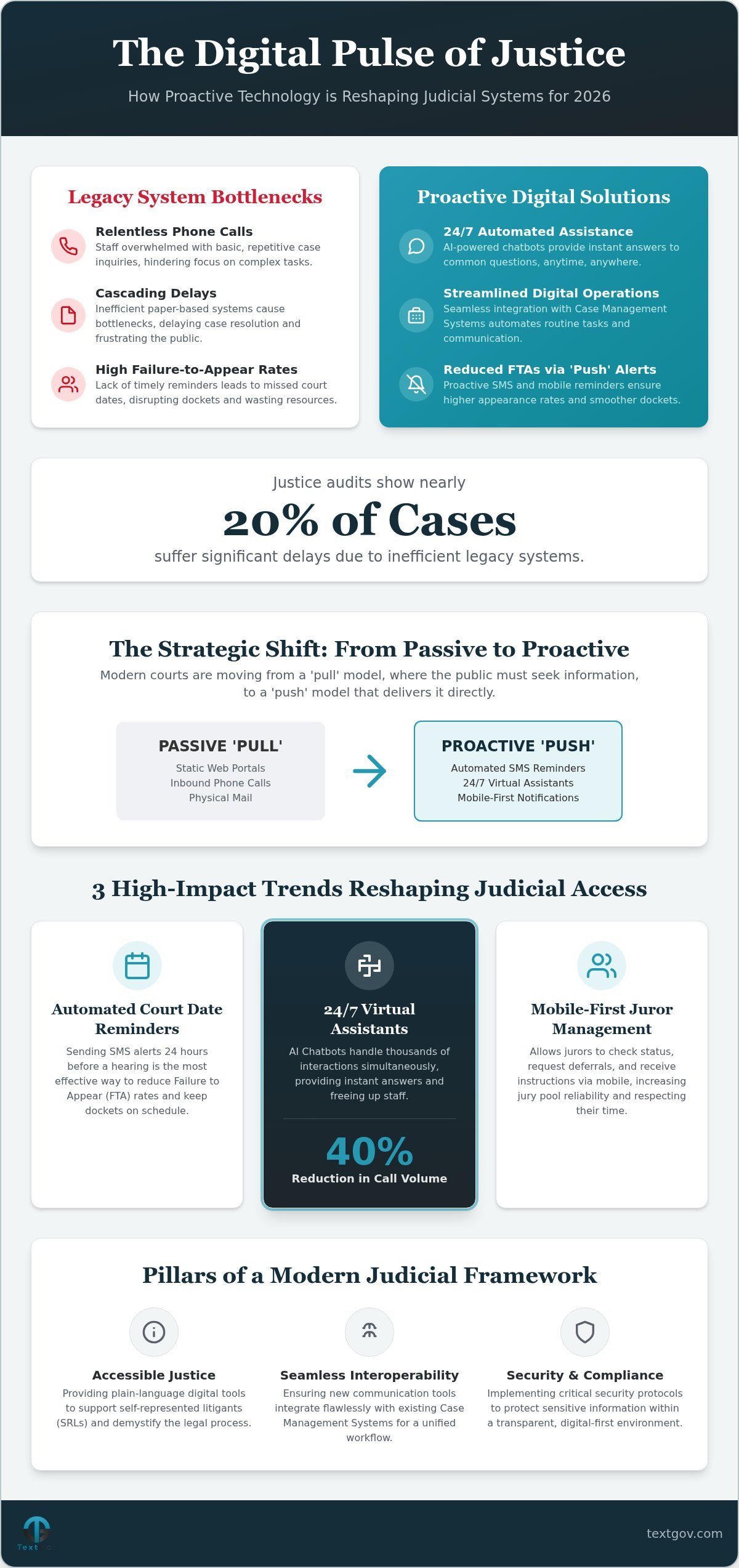
The urgency for this shift is clear when analyzing the data. Recent justice audits indicate that nearly 20% of cases suffer from significant delays caused by inefficient legacy systems. Digital tools directly combat these bottlenecks by automating routine administrative tasks and streamlining communication channels. This evolution has birthed “Constituent-Centric” judicial design. This new industry standard prioritizes the user experience, ensuring that every individual interacting with the court feels supported by a system that’s both transparent and responsive.
Moving Beyond Digital Filing and Paperless Records
Transitioning to a paperless office was once considered the finish line for many agencies. Now, it’s merely the starting block. True modernization requires a strategic roadmap where process automation actively reduces the manual burden on court clerks. By offloading repetitive inquiries to intelligent systems, staff can redirect their expertise toward complex judicial tasks that require human judgment. Digital transformation is the evolution from static record-keeping to proactive service delivery. This shift allows courts to act as dynamic service providers rather than passive repositories of information.
Addressing the Access to Justice Gap
A critical pillar of digital transformation for courts involves supporting self-represented litigants (SRLs). These individuals often struggle to navigate complex legal jargon without the benefit of professional counsel. Digital tools provide plain-language resources that demystify the legal process in real-time. This level of clarity doesn’t just improve operational efficiency; it builds essential public trust by ensuring justice remains accessible to everyone, regardless of their legal expertise or financial resources.
Proactive Engagement: 3 Trends Reshaping Judicial Access
The era of expecting the public to constantly check static portals is ending. Modern judicial leaders are adopting a “Push” philosophy, delivering vital information directly to the devices constituents use most. This evolution in digital transformation for courts focuses on proactive engagement, ensuring that the judicial process moves forward without unnecessary friction. By shifting from passive portals to active notifications, agencies can bridge the communication gap and improve overall case flow.
Consider these three high-impact trends currently reshaping the landscape:
- Automated Court Date Reminders: Sending a text 24 hours before a hearing ensures defendants and witnesses are prepared, which is the most effective way to reduce Failure to Appear (FTA) rates.
- 24/7 Virtual Assistants: Implementing court chatbot software allows agencies to handle thousands of interactions simultaneously, providing instant answers to recurring questions regardless of the hour.
- Mobile-first Juror Management: Modern systems allow jurors to check their status, request deferrals, or receive reporting instructions via mobile interfaces, respecting their time and increasing jury pool reliability.
The Rise of Asynchronous Public Inquiries
24/7 availability isn’t just a convenience; it’s a necessity for modern equity. Many constituents work during traditional court hours, making it impossible to call for information during the day. By deploying government chatbots for FAQ, agencies have successfully reduced incoming call volumes by as much as 40%. This efficiency allows staff to focus on complex administrative tasks while the public receives the high-level service they expect through an intuitive, always-on interface.
SMS as the Primary Interface for Justice
Texting offers engagement rates that dwarf email or traditional mail for court notifications. While a letter might sit unopened for days, an SMS is typically read within minutes, which is vital for meeting judicial deadlines. The specific impact of juror text reminder systems on jury pool participation is profound, as it provides a low-friction way for citizens to fulfill their civic duties. If your agency is ready to modernize, exploring these automated messaging solutions is a logical first step toward total efficiency.
Building a Scalable Roadmap for Judicial Efficiency
Implementing a successful digital transformation for courts requires a transition from fragmented upgrades to a cohesive, scalable strategy. A visionary roadmap prioritizes “Agile Implementation,” where administrators launch targeted, high-impact pilots to prove a concept before a full-scale rollout. For instance, starting with automated jury texting allows your team to experience immediate efficiency gains while gathering the user feedback necessary for data-driven innovation. This iterative approach ensures that every technological investment remains grounded in professional utility and constituent needs. Administrators evaluating their options will benefit from a thorough government messaging platform comparison to identify the solution best aligned with their agency’s specific operational requirements.
Security remains the cornerstone of this modernization journey. Protecting Personally Identifiable Information (PII) in a digital-first environment isn’t just a regulatory requirement; it’s a fundamental obligation to the public. High-performance systems must utilize sophisticated encryption and compliance protocols to maintain the integrity of the judicial process. By establishing these safeguards early, you create a reliable foundation that supports a significant upgrade of your existing communication standards. Agencies looking to meet accessibility mandates and slash call volumes can find practical guidance in this 2026 resource guide on 24/7 government messaging platforms.
Integration with Case Management Systems
Siloed technology is the primary barrier to sustainable progress. If your new communication tools don’t talk to your existing Case Management System (CMS), you risk creating more work for your staff rather than less. Seamless data flow ensures that updates made in one platform are instantly reflected across the entire judicial ecosystem, eliminating manual entry errors. While professional implementation and integration fees are essential components of this process, they represent a vital investment in the long-term stability and reliability of your digital infrastructure.
To further enhance this ecosystem, many administrators explore Credit Card & ACH Processing as a way to integrate financial transactions directly into their digital workflows, ensuring lower fees and better data synchronization.
Future-Proofing through AI and Automation
Looking ahead, the next wave of GovTech will leverage AI-driven predictive scheduling and advanced administrative support to further streamline operations. Administrators who view technology as a strategic partner, rather than just a collection of tools, will be best positioned to lead their agencies through these shifts. By embracing automation today, you aren’t just solving current bottlenecks; you’re building the high-level capability required to navigate the complexities of tomorrow’s legal landscape with confidence and technological sophistication.
Leading the Future of Judicial Excellence
The transition toward a proactive, constituent-centric model marks the most significant shift in modern judicial history. By prioritizing interoperability and embracing mobile-first communication, your agency can move beyond legacy bottlenecks toward a state of high-level performance. You’ve seen how automated reminders and 24/7 virtual assistants redefine access to justice while protecting vital administrative resources. This strategic digital transformation for courts isn’t just about adopting new software; it’s about building a resilient infrastructure that evolves alongside the public’s expectations.
Success in this new era requires a partner who understands the complexities of public sector communication. TextGov LLC specializes in reducing failure-to-appear rates through automated reminders and provides 24/7 government messaging platform support to drastically reduce manual call volumes for busy clerk offices. Our solutions integrate directly with judicial case management systems to ensure your data remains synchronized and secure. It’s time to streamline your court’s communication with TextGov LLC’s 24/7 messaging platforms. Step confidently into the future of judicial administration and redefine what’s possible for your constituents today.
Frequently Asked Questions
What is the first step in digital transformation for a court?
The first step in a successful digital transformation for courts is a comprehensive audit of existing administrative bottlenecks and legacy infrastructure. By identifying where manual processes cause the most significant delays, such as case status inquiries or jury coordination, administrators can prioritize high-impact pilot programs. This strategic assessment ensures that new technological investments directly address the most pressing needs of both the staff and the public.
How do court chatbots improve access to justice for the public?
Court chatbots improve access to justice by providing 24/7 availability for individuals who can’t interact with the court during traditional business hours. These intelligent assistants offer real-time answers to common procedural questions in plain language, which is essential for supporting self-represented litigants. This level of constant support bridges the communication gap, ensuring that justice remains accessible to all constituents regardless of their legal expertise or personal schedules.
Can automated text reminders really reduce failure to appear (FTA) rates?
Automated text reminders are highly effective at reducing failure to appear rates by delivering critical hearing notifications directly to a constituent’s mobile device. Since SMS messages have significantly higher open rates than traditional mail or email, these proactive alerts ensure that court dates remain a top priority for defendants and witnesses. This simple shift from passive record-keeping to active engagement drastically improves docket efficiency and minimizes avoidable judicial delays.
Is digital court technology compliant with privacy and security regulations?
Modern digital court technology is built with sophisticated encryption and security protocols to ensure full compliance with privacy and data protection regulations. Protecting Personally Identifiable Information (PII) is a foundational requirement for any high-performance judicial system. Professional messaging platforms utilize secure data transmission and storage methods, providing administrators with the confidence that constituent information remains confidential while maintaining a transparent and efficient digital ecosystem.
How does digital transformation impact the daily workload of court clerks?
A strategic digital transformation for courts significantly reduces the manual workload of court clerks by automating repetitive tasks like answering basic case inquiries or managing jury notifications. When intelligent chatbots and automated messaging systems handle the bulk of routine public interactions, staff can redirect their focus toward more complex judicial duties. This shift not only increases organizational efficiency but also improves employee satisfaction by eliminating the stress of overwhelming call volumes.