
What if the greatest obstacle to a functional legal system isn’t a lack of resources, but an outdated communication gap that keeps citizens and clerks in a state of constant friction? You’ve likely seen the toll that overwhelming call volumes and high failure-to-appear rates take on your staff’s morale and your court’s schedule. It’s a frustrating reality that many jurisdictions accept as an inevitable cost of public service. However, the standard for excellence is shifting. This case study demonstrates that modernizing judicial interactions is no longer a distant goal; it’s a 2026 reality achieved through strategic digital integration.
You’ll discover how AI chatbots and automated SMS systems are eliminating administrative bottlenecks and elevating the standard of judicial communication. We’ll explore the transition from reactive clerical tasks to a proactive, 24/7 accessible model that ensures every constituent stays informed and every hearing remains on track.
Key Takeaways
- Identify the critical communication gaps in traditional systems and how visionary GovTech solutions are redefining public accessibility in 2026.
- Discover the practical steps for modernizing judicial interactions by integrating AI-driven chatbots directly into your existing court management workflows.
- See how automating routine FAQ handling empowers court clerks to focus on complex case processing while maintaining 24/7 public responsiveness.
- Analyze real-world data showing how automated SMS reminders can reduce failure to appear rates by up to 30% and drastically lower inbound call volumes.
The Shift Toward Modernizing Judicial Interactions in 2026
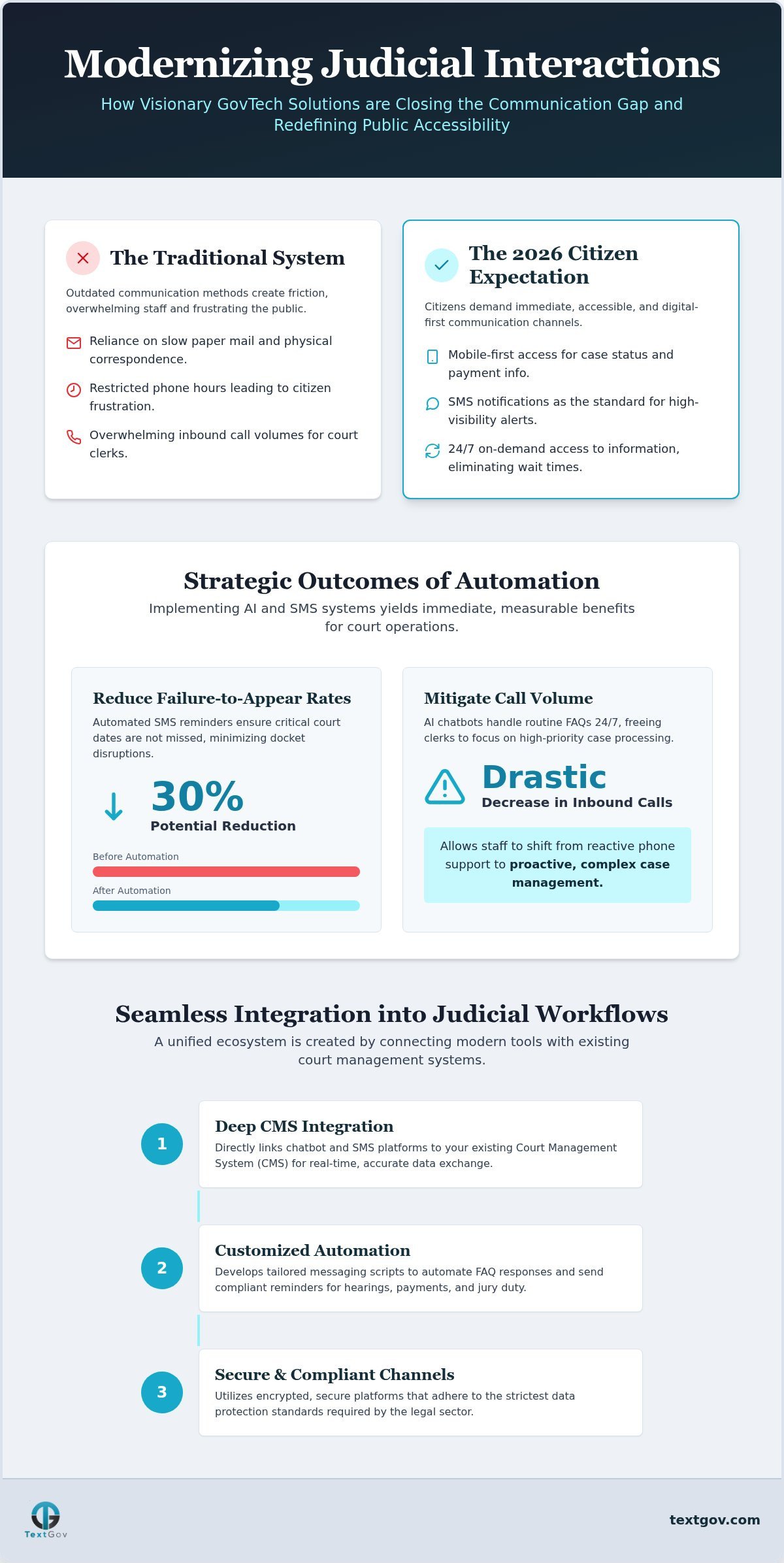
The gap between traditional court administration and public expectation has never been wider. While legacy systems rely on paper mail and restricted phone hours, the 2026 citizen demands immediacy. Modernizing judicial interactions isn’t just a technological upgrade; it’s a fundamental shift in how the justice system maintains its promise of accessibility. By replacing outdated friction with fluid digital paths, courts are moving from a reactive stance to a visionary model of service.
GovTech serves as the primary engine for this transformation. Modernizing judicial interactions through automated engagement tools creates a “front door” to the courtroom that never closes. This constant availability does more than just answer questions; it builds a strategic foundation of transparency and trust. When the public can access case status or payment information at any hour, administrative efficiency naturally rises. Court clerks can then focus their specialized skills on complex case processing rather than repeating basic instructions over the phone.
Meeting Citizen Expectations for Digital-First Communication
The transition from manual inquiries to on-demand digital responses is now a standard requirement. Most people don’t want to navigate complex phone trees or wait weeks for a letter. They prefer the speed and clarity of their mobile devices. SMS has become the gold standard for legal notifications because it ensures high visibility and immediate action. This shift isn’t just about convenience; it’s about streamlining the path to compliance and ensuring critical court dates are never missed due to a lost envelope.
Integrating Digital Infrastructure into Judicial Workflows
Successful modernizing judicial interactions depends on the tactical synergy between new digital tools and existing legacy frameworks. By establishing a direct link between court chatbot software and your current court management system (CMS), you create a unified ecosystem that updates in real time. This deep integration allows for the automated handling of repetitive inquiries, which effectively liberates court clerks from the burden of manual FAQ responses. As departments scale their communication efforts to meet rising public demand, these automated assistants ensure that service quality remains high without the need for additional headcount.
Security and compliance remain the cornerstones of this digital transition. Judicial messaging must adhere to strict data protection standards to ensure that sensitive information remains confidential and secure. Modern platforms utilize encrypted channels that meet the rigorous demands of the legal sector, providing peace of mind for both administrators and the public. This robust security framework allows for a multi-departmental rollout, ensuring that jury services, traffic court, and general inquiries all benefit from the same high standard of automated engagement.
Seamless Case Management Integration for SMS and AI
Implementation involves more than just software deployment; it includes developing custom messaging scripts tailored to your agency’s specific legal requirements. These scripts ensure that every interaction remains compliant while providing accurate, real-time data to constituents. Connecting these tools to cloud-based platforms requires rigorous data integrity checks to maintain the sanctity of judicial records. Utilizing specialized government SMS notification services ensures that reminders and updates are delivered with the reliability necessary for legal compliance. When you partner with a strategic GovTech provider, the process becomes a seamless transition rather than a disruptive overhaul. This technical foundation allows your team to maintain focus on high-priority case processing while the digital infrastructure manages the front-line engagement.
Case Study: Strategic Outcomes of Automated Judicial Messaging
Implementing automated systems yields immediate, quantifiable benefits for court operations. Modernizing judicial interactions through digital assistants creates a measurable ROI across several key performance indicators:
- Reduced Failure to Appear: Systems that reduce failure to appear rates by up to 30% minimize docket disruptions and administrative overhead.
- Call Volume Mitigation: Implementing local government automated response tools can cut inbound calls significantly, allowing staff to focus on critical case management.
- Enhanced Juror Participation: Persistent, automated text alerts improve response rates by keeping service requirements top-of-mind for busy citizens.
- Proactive Defendant Engagement: Pre-trial texting ensures defendants receive timely court date reminders, fostering higher compliance and smoother proceedings.
These automated touchpoints create a reliable bridge between the court and the community, fostering a culture of compliance and accountability. By delivering clear, actionable information directly to a user’s mobile device, jurisdictions can bypass the delays inherent in traditional mail systems.
Achieving Efficiency with 24/7 Government Messaging
The long-term value of a SaaS-based approach lies in its continuous evolution. These subscriptions provide ongoing technical support and platform updates, ensuring the digital infrastructure remains at the leading edge of technology. This model facilitates a transition from a reactive judicial communication style to a proactive one. Instead of waiting for constituents to call with questions, the system anticipates needs and delivers information before problems arise. Modernizing judicial interactions in this manner transforms the court from a passive entity into an active partner in public service. It’s a strategic shift that ensures your agency remains resilient and responsive to the needs of the 2026 public.
Embracing the Future of Judicial Communication
The transition toward a digital-first courtroom is no longer a theoretical goal but a practical necessity for efficient governance. By integrating automated workflows and 24/7 messaging, your agency can move beyond the limitations of traditional communication channels. We’ve explored how modernizing judicial interactions through AI chatbots and SMS notifications leads to a proven reduction in court call volumes and improved public compliance. These tools don’t just solve administrative friction; they elevate the standard of public service by providing instant, reliable access to justice. Our tailored GovTech implementation ensures your team has the support needed to scale these solutions across every department. It’s time to redefine how your court engages with the community. Partner with TextGov to modernize your judicial interactions today and lead your jurisdiction into a new era of operational excellence.
Frequently Asked Questions
How does modernizing judicial interactions affect court clerk workloads?
Modernizing judicial interactions significantly reduces the manual burden on court clerks by automating responses to routine public inquiries. Instead of spending hours answering repetitive questions about court dates or fine payments, clerks can focus on complex case processing. This shift leads to a measurable decrease in inbound call volumes and minimizes the administrative friction that often causes workplace burnout in high-volume jurisdictions.
Can automated messaging systems integrate with our current case management software?
Yes, modern digital assistants are designed with robust CMS integration capabilities to ensure a seamless data flow. These systems connect directly to your existing cloud-based platforms, allowing for real-time updates and accurate information delivery. This synergy ensures that every automated text or chatbot response reflects the most current case status, maintaining data integrity without requiring manual entry from your staff.
Is SMS messaging for courts secure and compliant with legal standards?
Security is a core priority for judicial messaging platforms in 2026. These systems utilize encrypted channels and adhere to strict data protection standards to ensure all communications remain confidential. By following established legal guidelines for digital notifications, courts can safely send juror reminders and pre-trial alerts. This high standard of security protects sensitive information while ensuring every digital interaction meets necessary compliance requirements.
What are the primary benefits of using a court chatbot for public inquiries?
A court chatbot provides 24/7 accessibility, allowing the public to receive immediate answers to their questions outside of standard business hours. This constant availability improves citizen engagement and fosters a culture of transparency. Additionally, chatbots handle high volumes of simultaneous inquiries, which prevents bottlenecking and ensures that every constituent receives a prompt, professional response that aligns with your court’s official standards.