
While 98% of SMS messages are read within three minutes, many judicial systems remain anchored to manual outreach that results in missed connections and administrative bottlenecks. You’re likely managing the strain of rising failure to appear rates and the persistent noise of routine inquiry calls that drain your staff’s resources. Implementing a robust court management system sms integration isn’t just a technical upgrade; it’s a strategic shift toward a modernized, proactive judiciary. This 2026 framework delivers the technical and operational roadmap required to bridge case data with automated messaging, ensuring your organization operates at the leading edge of digital optimization. We’ll explore how to dissolve data silos and establish a seamless flow of information that reduces manual workloads while cultivating deeper public trust through high-performance digital tools.
Key Takeaways
- Master the transition from reactive citizen inquiries to proactive, automated alerts that redefine judicial communication efficiency.
- Execute a high-performance court management system sms integration by prioritizing seamless API connectivity and robust data security protocols.
- Utilize a strategic five-point checklist to ensure your infrastructure meets the rigorous 2026 standards for scalability and regulatory compliance.
- Implement a proven framework for automated pre-trial reminders and jury alerts to significantly reduce failure to appear rates and administrative bottlenecks.
The Architecture of Court Management System SMS Integration
A sophisticated court management system sms integration serves as the critical technical bridge between static judicial records and dynamic public engagement. It creates a secure, automated conduit for data exchange between internal databases and mobile messaging gateways. Traditionally, judicial communication followed a “pull” model, requiring citizens to navigate complex phone menus or websites to retrieve case status. Modern 2026 standards demand a shift toward “push” communication, where automated alerts reach constituents instantly. This transition is a fundamental pillar of court technology modernization. It replaces bureaucratic friction with streamlined, proactive interactions that align with the high-performance expectations of a digital-first society.
The Data-to-Dialogue Pipeline
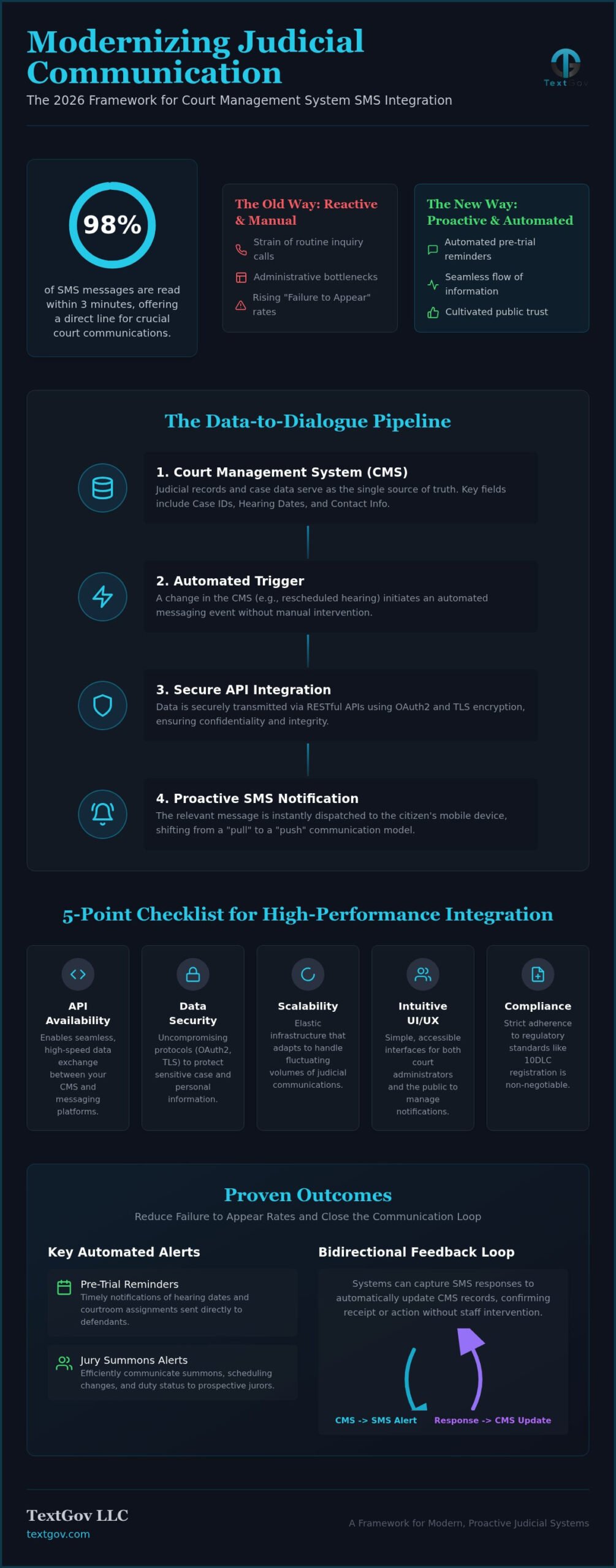
The effectiveness of this framework depends on the precision of the data-to-dialogue pipeline. This process involves mapping case management variables directly to messaging triggers to ensure accuracy and relevance. Within the broader context of Justice Technology, these automated triggers turn routine database updates into actionable real-time notifications. By refining your court management system sms integration to support these triggers, you eliminate the lag time that leads to judicial bottlenecks. The system typically synchronizes several vital fields:
- Unique case and citation identifiers
- Dynamic hearing dates and courtroom assignments
- Defendant, witness, and juror contact information
When a record changes, the integration dispatches a text immediately. This level of responsiveness doesn’t just inform; it empowers the public and ensures the judicial process remains fluid and efficient.
A Strategic Template for Evaluating SMS Connectivity
Selecting the right framework for a court management system sms integration requires more than just checking a feature box. It’s a strategic decision that impacts every stage of the judicial process. Administrators must evaluate readiness through a rigorous five-point checklist: API availability for seamless data exchange, uncompromising data security, elastic scalability, intuitive UI/UX for both staff and citizens, and strict regulatory compliance. Adhering to court messaging compliance is non-negotiable when syncing sensitive case data with external messaging gateways. This ensures your organization maintains public trust while modernizing its outreach.
Many legacy systems offer basic native messaging modules, yet these often lack the sophisticated automation and 10DLC registration support found in specialized third-party layers like those provided by TextGov LLC. A dedicated platform provides the flexibility to map the entire user journey with precision, from the moment a case is filed to final disposition alerts. Real-world applications, such as municipal court SMS notification preferences, demonstrate how these proactive touchpoints significantly improve appearance rates. If you’re looking to bridge these gaps, exploring a specialized court chatbot can further streamline these interactions by providing 24/7 assistance alongside automated alerts.
Technical Requirements for Judicial APIs
Modernizing judicial interactions relies heavily on RESTful APIs that facilitate high-speed, reliable data transit. Security is paramount when handling public records. Your integration must utilize industry-standard authentication protocols like OAuth2 and enforce TLS encryption for all data in motion. These technical safeguards ensure that case information remains confidential while moving between your CMS and the messaging platform, supporting a stable court management system sms integration.
Implementation Framework: Reducing Failure to Appear Rates
Deploying a high-performance court management system sms integration serves as the primary mechanism to reduce failure to appear rates in 2026. While previous sections detailed the technical pipeline, the practical application focuses on closing the communication loop between the bench and the public. By automating pre-trial text reminders and jury summons alerts directly from judicial databases, courts ensure that constituents receive timely, accessible information through the devices they use most. It’s a strategy that aligns with established research on court system automation and integration, which underscores how digital connectivity eliminates the friction of traditional mail.
The true power of this framework lies in the bidirectional feedback loop. Instead of static one-way alerts, an integrated system captures SMS responses and updates CMS records automatically. When a defendant confirms attendance or a juror requests a postponement via text, the database reflects those changes in real-time. To manage these complex, multi-turn conversations, agencies utilize TextGov LLC and its specialized court chatbot software. This intelligent layer acts as the 24/7 interface for the integration, ensuring staff don’t have to handle routine data collection manually.
Operational ROI and Administrative Relief
Successful integration delivers measurable relief to judicial staff by drastically reducing the volume of manual clerk inquiries. When courts deploy automated messaging, they often see a 20% or greater increase in defendant appearance rates. This surge in attendance directly improves docket efficiency, preventing the judicial bottlenecks caused by rescheduled hearings and unserved warrants. By shifting routine communication to an automated pipeline, administrators allow their teams to focus on high-priority case management while maintaining a sophisticated, modern public service standard.
Modernizing the Judicial Interface for 2026 and Beyond
Transitioning from reactive inquiries to proactive, automated “push” communication is no longer a luxury; it’s a fundamental requirement for judicial efficiency. A successful court management system sms integration requires a strategic balance of technical API precision and strict adherence to evolving messaging compliance standards. By bridging the gap between internal case databases and constituent mobile devices, agencies achieve measurable reductions in administrative workloads and significant improvements in defendant appearance rates. We provide specialized implementation for public sector agencies through scalable SaaS platforms that align with national judicial standards. Embracing this digital transformation ensures your court remains a reliable, high-performance pillar of public trust in an increasingly mobile world. We’re ready to help you navigate this transition with confidence and technical expertise.
Frequently Asked Questions
How does court management system SMS integration affect data security?
A secure court management system sms integration utilizes encrypted communication channels like TLS and robust authentication protocols such as OAuth2 to protect sensitive judicial data. By establishing a direct, automated link between your case records and messaging gateways, you eliminate the security risks associated with manual data handling or unencrypted exports. This architecture ensures that sensitive information remains protected while moving through the modern data pipeline.
Can I integrate SMS with a legacy on-premise case management system?
You can definitely modernize legacy on-premise systems by utilizing specialized integration layers that bridge the gap between local databases and cloud messaging platforms. While older software often lacks native SMS features, professional implementation services configure secure API connectors to enable real-time data flow. This approach allows agencies to maintain their existing infrastructure while gaining the high-performance benefits of a proactive, automated notification ecosystem.
What are the most effective triggers for automated court reminders?
The most effective triggers for court management system sms integration include initial case filing, hearing date assignments, and jury summons notifications. Sending reminders at specific intervals, such as seven days and 24 hours before an appearance, ensures maximum visibility. These automated workflows turn routine database updates into proactive constituent outreach, significantly reducing the administrative burden on your staff while keeping the public informed.
How does SMS integration help in reducing failure to appear (FTA) rates?
Integration reduces failure to appear rates by replacing unreliable mail with high-visibility text alerts that boast nearly universal open rates. These automated reminders address common reasons for no-shows, such as forgotten dates or lost paperwork. By creating a seamless feedback loop where defendants can confirm attendance via text, courts gain early insight into docket changes and can reallocate judicial resources more effectively.