
What if your court’s most essential administrative asset wasn’t a physical office, but a sophisticated digital ecosystem that anticipates constituent needs? Many judicial leaders currently face a relentless tide of routine phone inquiries and the mounting pressure of manual record bottlenecks. You likely recognize that traditional methods are no longer sufficient to manage rising failure to appear rates. This guide provides a visionary roadmap for court technology modernization, shifting the focus from simply digitizing the past to actively automating the future of judicial interactions.
You’ll learn how modernizing infrastructure through AI and automation transforms court efficiency and expands public access. We’ll examine a strategic framework for 2026 that emphasizes the move toward virtual court assistants and seamless integration with existing case management systems. From reducing administrative workloads to achieving higher appearance rates, we’ll preview the essential tools required to elevate your organization’s performance and redefine the constituent experience.
Key Takeaways
- Shift your judicial operations from reactive paper-based workflows to a proactive, digital-first environment that prioritizes fiscal responsibility and transparency.
- Deploy sophisticated virtual clerk assistants to automate routine inquiries, allowing your staff to focus on complex tasks rather than high call volumes.
- Connect automated messaging tools directly to your source of truth through seamless case management system integration for real-time data accuracy.
- Adopt a forward-looking framework for court technology modernization that utilizes jury texting to reduce failure to appear rates and strengthen constituent access.
The Evolution of Judicial Efficiency: Defining Court Technology Modernization
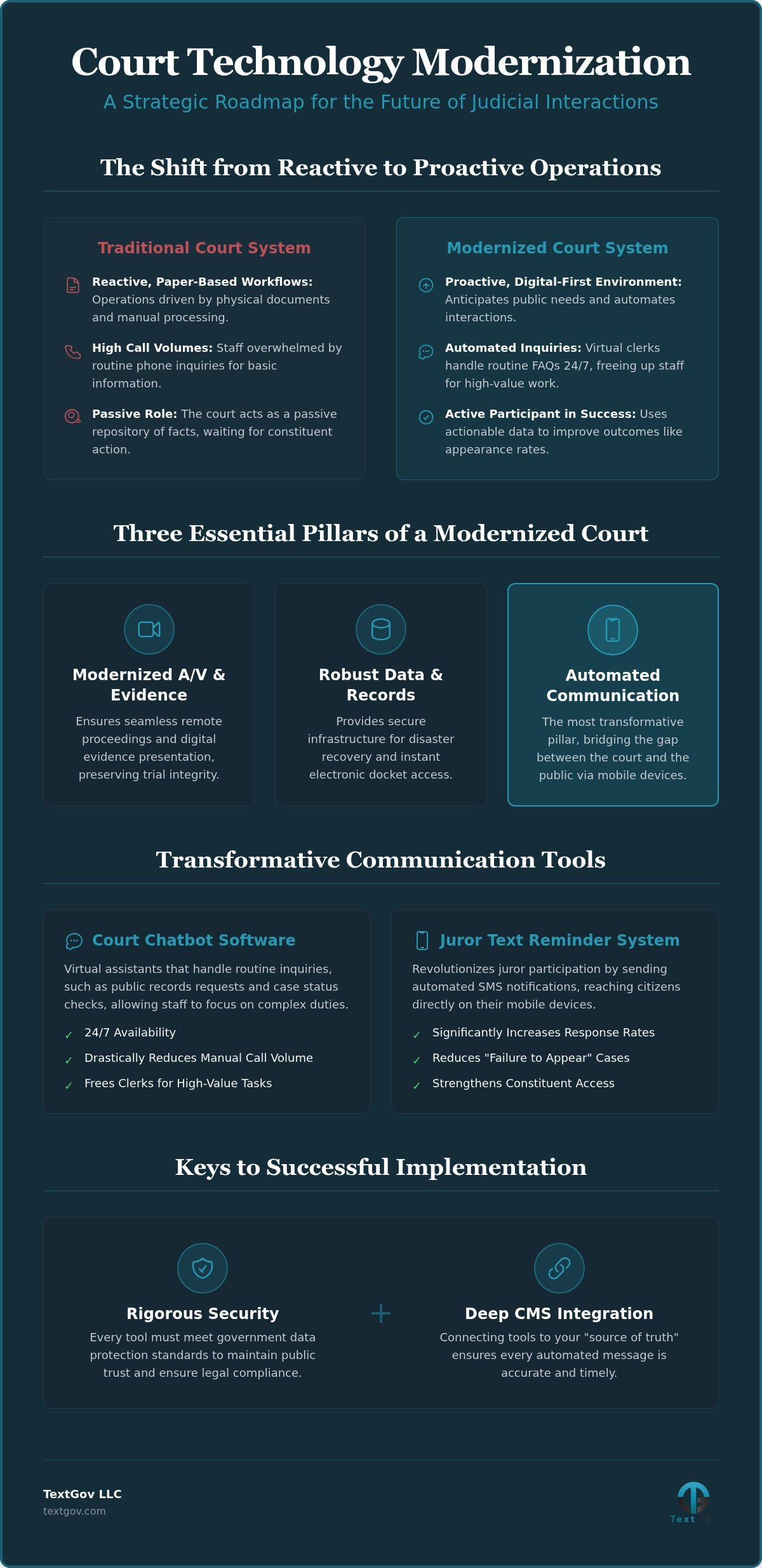
Modernization represents a fundamental pivot from reactive, manual systems toward proactive, digital-first judicial environments. In the past, efficiency simply meant faster filing; in 2026, it means anticipating the needs of the public before they result in a congested lobby or a missed hearing. Real court technology modernization goes far beyond the surface level of scanning paper records. While digitizing archives provides a necessary foundation, true transformation occurs when data becomes actionable, moving the court from a passive repository of facts to an active participant in constituent success.
This evolution directly addresses the “Engagement Gap,” which is the growing divide where legacy infrastructures fail to meet modern citizen expectations. Today’s constituents expect the same level of digital responsiveness from the public sector that they receive from the private sector. Strategic drivers like fiscal responsibility and the demand for radical transparency now require courts to adopt tools that reduce administrative friction. By automating routine interactions, courts can bridge this gap and ensure that justice remains accessible even as caseloads grow in complexity.
The Shift from Physical to Digital Infrastructure
Transitioning from aging on-premise servers to secure, cloud-based government messaging platforms allows courts to scale their communications without increasing physical overhead. Interoperability acts as the linchpin of this shift, connecting disparate case management systems to external communication channels like automated Court Chatbots and Jury Texting. This seamless connectivity ensures that the court’s “source of truth” is always accessible, providing real-time updates that keep the judicial process moving forward. Court technology modernization is the strategic implementation of digital tools that harmonize judicial equity with unparalleled operational excellence.
Three Essential Pillars of a Modernized Court System
A comprehensive 2026 framework for court technology modernization rests on three interdependent pillars. First, modernizing courtroom A/V and evidence presentation ensures that remote proceedings and digital annotations are seamless, preserving the integrity of the physical trial. Second, robust data and records management provides the necessary infrastructure for disaster recovery and instant electronic docket access. These components ensure the court remains functional and transparent under any circumstances.
The third and perhaps most transformative pillar is automated communication. While hardware and records provide the foundation, communication tools bring the system to life. These pillars interact to form a cohesive ecosystem where information flows instantly from the database to the constituent. Information flows instantly. This synergy reduces the friction that typically slows down judicial processes and creates a more responsive environment for all parties involved.
Bridging the Communication Gap with AI and SMS
Legacy systems often fail because they don’t reach citizens where they are: on their mobile devices. Implementing sophisticated court chatbot software allows agencies to handle routine FAQ traffic 24/7 without increasing staff workload. These virtual assistants manage public records inquiries and status checks, drastically reducing manual call volumes and freeing clerks for high-value tasks.
Juror participation is also revolutionized through a juror text reminder system. By sending automated notifications, courts see a significant increase in response rates and a reduction in failure to appear cases. If you’re ready to explore how these tools integrate with your current workflow, automated messaging solutions offer a clear path forward. This proactive approach ensures your court stays ahead of modern expectations while maintaining a high standard of excellence.
Strategic Implementation: Overcoming Modernization Hurdles
Transitioning from a legacy system to a modernized environment requires a rigorous approach to security and systems alignment. Security is the first non-negotiable step. Every digital tool must meet rigorous government data protection standards to maintain public trust and ensure legal compliance. Beyond security, successful court technology modernization depends on deep case management integration. Connecting your communication tools directly to the source of truth ensures that every automated message is accurate and timely. A well-executed court management system SMS integration creates a foundation for sustainable growth by dissolving data silos and enabling real-time automated outreach. This level of court technology modernization creates a foundation for sustainable growth.
Measuring success is equally critical. You should track tangible metrics such as:
- Significant reductions in administrative overhead.
- Faster resolution of routine public inquiries.
- Improved fiscal responsibility through resource optimization.
Selecting a strategic partner rather than a simple hardware vendor makes the difference between a temporary fix and a lasting transformation. A true partner understands the complexities of the public sector and offers a scalable path toward excellence. They don’t just provide software; they help you redefine how your organization interacts with the community.
Improving Outcomes through Defendant and Juror Engagement
Judicial leaders can effectively reduce failure to appear rates by deploying automated pre-trial texting. This strategy ensures accessibility for remote or underserved populations by prioritizing mobile-first communication. To achieve maximum impact, agencies must implement automated messaging for government agencies using protocols that guarantee high deliverability. This proactive engagement doesn’t just improve court appearance rates; it strengthens the entire judicial process for the community you serve. You’re not just updating tools; you’re expanding access to justice.
Building the Future of Judicial Excellence
Transitioning to a proactive digital environment requires more than just digitizing records; it demands a synergy between automated communication, secure data management, and seamless system integration. By deploying virtual clerk assistants and targeted texting, courts can finally bridge the long-standing engagement gap. These tools provide 24/7 automated messaging that’s been proven to reduce court call volumes while ensuring rigorous compliance through deep case management integration. Embracing this framework for court technology modernization allows your organization to lead the way in judicial equity and operational efficiency.
The path to a more responsive and accessible court system starts with a single strategic step toward innovation. Efficiency isn’t just a goal; it’s a necessity.
Frequently Asked Questions
What is the first step in court technology modernization?
The initial phase involves identifying engagement gaps in your current system by auditing routine manual tasks. You should pinpoint bottlenecks, such as high call volumes for court dates or jury status inquiries. Establishing a clear roadmap for court technology modernization ensures your initial investments prioritize high-impact solutions like 24/7 virtual assistants, which yield the highest return in staff efficiency and public access.
How does court technology modernization reduce failure to appear (FTA) rates?
Modernization addresses the root causes of no-shows by delivering proactive reminders directly to defendant mobile devices. Pre-trial texting ensures court dates and location details are always accessible, which significantly lowers the risk of simple oversight. These automated notifications provide a consistent communication loop that keeps constituents informed, ultimately driving higher appearance rates and reducing the administrative burden of bench warrants.
Are court chatbots and SMS systems secure and compliant?
Professional platforms are engineered specifically to meet rigorous government data protection standards. Systems like those provided by TextGov utilize a cloud-based SaaS model that prioritizes security and ongoing technical support. These tools ensure all constituent interactions remain confidential and compliant with judicial regulations. You can modernize your infrastructure with confidence, knowing that court messaging compliance is a core component of the framework.
Can modern communication tools integrate with legacy case management systems?
Seamless integration with existing case management systems is a standard feature of a successful court technology modernization strategy. Professional implementation includes connecting automated messaging platforms directly to your court’s source of truth. This connectivity ensures the information shared with the public is always accurate and updated in real-time. You don’t have to replace your legacy database to benefit from advanced automation.
How does modernization improve the juror experience?
Modernization transforms the juror experience by replacing confusing paper-based processes with intuitive Jury Texting. Jurors receive instant notifications regarding their reporting status, arrival times, and location changes, which eliminates the need to call a busy clerk’s office. This mobile-first approach respects their time and increases overall response rates, making the jury selection process more efficient for both the court and the community.
What are the cost-saving benefits of judicial automation?
Automation generates substantial savings by drastically reducing manual call volumes and administrative workloads. By delegating routine inquiries to virtual clerk assistants, your staff can focus on complex tasks that require human intervention. Additionally, lowering FTA rates and streamlining juror management reduces the fiscal strain caused by rescheduled hearings and wasted resources. It’s a strategic move that enhances long-term fiscal responsibility. Administrators seeking to balance efficiency with regulatory requirements should also review the latest court messaging compliance guidelines for 2026 to ensure every automated interaction meets current legal standards.